
Checking Criminal History in Marion
Start a Marion criminal record search by defining the record. Marion Police creates Marion incident and arrest reports. The Crittenden Circuit Court Clerk keeps District and Circuit case files. The jailer and dispatch help locate a recent Marion arrestee because Marion advertises no city jail. Kentucky's CourtNet gateway, AOC FastCheck, KSP conviction-record requests, KOOL, VINELink, and the KSP registry answer different statewide questions. No single result replaces the others.
Use the narrowest source first. A report number belongs with police. A case number belongs with the clerk. A current custody question belongs with the jailer or dispatch. For review of your own statewide repository information, follow KSP's official form channel. This order reduces false matches and makes correction requests easier because each custodian controls only its own record.
- Call Marion Police/dispatch at 270-965-3500 and confirm that Marion officers created the report.
- Ask for the records custodian and provide the incident number, date, time, location, record type, and preferred format.
- Search Kentucky Find a Case or Find a Court Date under Crittenden County; Marion has no municipal docket.
- Call the jailer at 270-965-3185 for current custody, then use KOOL or VINELink when the case reaches those systems.
- For a statewide report, use AOC FastCheck or the appropriate KSP self-review channel.
Marion Records Serve 2,916 Residents
The official City of Marion website identifies Marion as the county seat and describes its local institutions.

Marion's 2020 population was 2,916. City Hall is at 217 S. Main Street and can be reached at 270-965-2266. The city sits south of the Ohio River and northeast of Land Between the Lakes. Its 40-acre City-County Park, hospital, airport, manufacturing park, school system, and nearby Amish community provide geographic context, but they do not define crime patterns. No current official Marion crime table was found, so county court totals must not be presented as city crime counts.
Marion Police Department Records
The city's local-services page confirms that Marion maintains a police department with a full-time chief and five full-time officers.
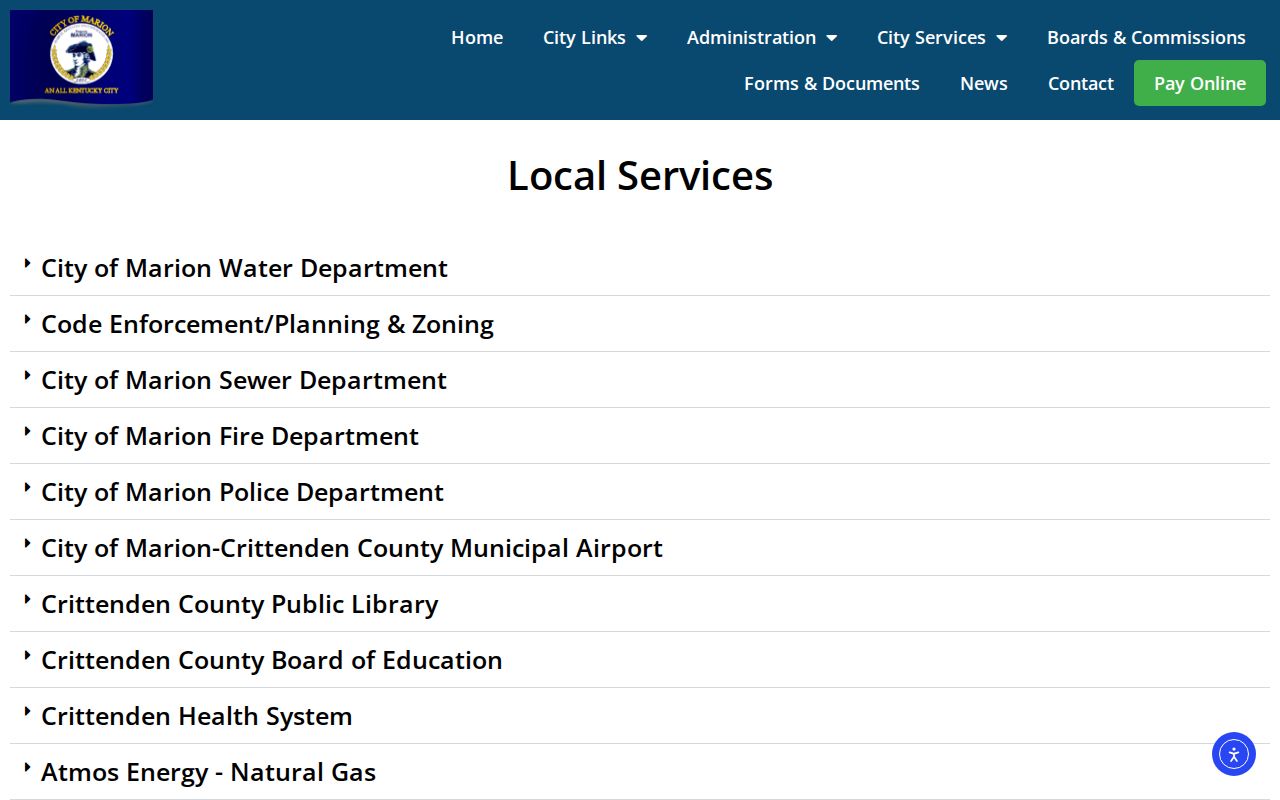
Chief Bobby West is listed at 270-965-3500 and bwest@marionky.gov. That same number serves police/dispatch. Marion did not advertise a dedicated police-report portal, copy fee, request PDF, or records hours in the official sources reviewed. Call Marion first, ask for the records custodian, and confirm the request method. A precise Marion request identifies the event date and time, location, people involved, incident or report number if known, requested record, and electronic or paper format.
The report may be redacted or withheld in part under Kentucky law. Ask for the releasable portion and a written explanation for any denial. Marion's tourism app is not a police app and does not advertise warrants, reports, bookings, or registry functions.
Do not ask Marion City Hall for a compiled “criminal history” if the need is an existing incident report. Public agencies generally retrieve records they maintain; they do not have to create a new Marion report that joins police, jail, court, and state data. Describe the existing document and a reasonable date range. If Marion Police says another agency handled the call, redirect the request rather than treating the response as proof that nothing occurred.
Marion Officials and Record Routing
The Kentucky city profile lists Marion's population and current city contacts.
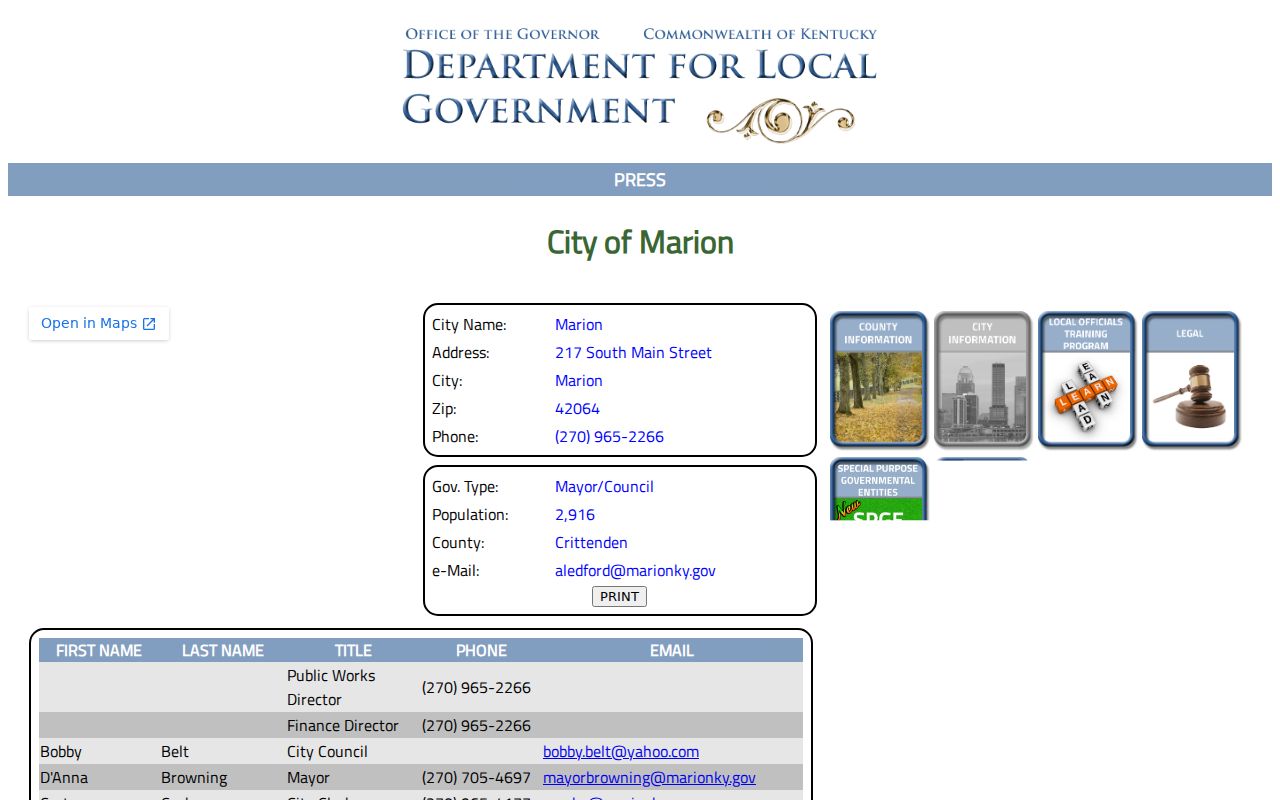
The directory names Mayor D'Anna Browning, City Clerk Cortny Cosby, and Police Chief Bobby West. The clerk can be reached at 270-965-4177 or ccosby@marionky.gov. These roles matter because a request must reach the agency that created the record. Police incident and arrest material begins with Marion Police. City administrative records route through City Hall. Criminal dockets and judgments are state court records held by the Crittenden Circuit Court Clerk, not by the mayor or city clerk.
Marion Arrests and Bookings
Marion does not advertise a city jail. After a city arrest, call police/dispatch to verify the arresting agency, then the Crittenden County jailer at 270-965-3185 for current placement and instructions. The county sheriff site did not provide an official searchable local booking roster in the research. Avoid Crittenden County, Arkansas jail pages, which commonly appear in searches but describe a different jurisdiction.
KOOL is the Kentucky Department of Corrections locator, not a same-day Marion booking log. VINELink can provide custody status and alerts where participating data is available. A court date may appear through Kentucky Find a Court Date after a case is entered. Arrest, booking, charge, and conviction remain separate facts. Read the Crittenden County arrest lookup channels together rather than treating one entry as the final outcome.
If the search concerns a traffic collision rather than a criminal arrest, confirm who investigated it. The Crittenden Sheriff publishes an official accident-report route, and Kentucky provides a separate collision-report channel. A crash report can mention citations or enforcement activity, but it is not itself the complete criminal court record. Match its report number to any later state case.
Marion City Hall Is the Courtroom
Marion's most unusual record-access detail is physical. Kentucky Court of Justice currently sends all Crittenden courtroom proceedings to the Marion City Hall council chamber at 217 S. Main Street, yet the Crittenden Circuit Court Clerk's temporary office is at 208 S. Main Street. Attending a Marion hearing and requesting a file therefore involve two nearby addresses.
The clerk, Melissa Guill, can be reached at 270-965-4200 or 270-965-4046 on weekdays from 8 a.m. to 4:30 p.m. Central. The clerk supplies Circuit, District, and Family Court records. A file's age and type can place it at a record facility. When that happens, ask the clerk for the case number and file-locator number. “Not at this counter” does not always mean “no record exists.”
Call before travel because the official court page labels the locations temporary. The clerk accepts current payment methods listed as cash, check, money order, and online ePay, but a case payment channel is not the same as a records-copy order. Ask what identification, case details, copy cost, certification charge, and delivery method apply to the file requested.
Municipal Court Records in Marion
Marion has no separate municipal court search because Kentucky's unified judiciary handles Marion cases. Crittenden District Court hears Marion ordinance matters, traffic cases, misdemeanors, violations, and preliminary felony proceedings. Felony cases that continue move to Crittenden Circuit Court. Search the state Find a Case gateway and choose Crittenden County, or request the Marion file from the circuit clerk.
| Court Name | Crittenden District or Circuit Court; no Marion municipal court. |
|---|---|
| Case Types Heard | District handles ordinances, traffic, misdemeanors, violations, and felony preliminaries; Circuit handles felonies. |
| Case Lookup Channel | Kentucky Find a Case/Find a Court Date, public terminal, or circuit clerk. |
| What the Docket Shows | Case number, charges, parties, events, dates, status, and disposition where public. |
| Copies & Fees | Ask the clerk for current copy cost and delivery options. |
Crittenden Offices Serving Marion Records
The state's Crittenden County profile identifies county officials and government contacts.
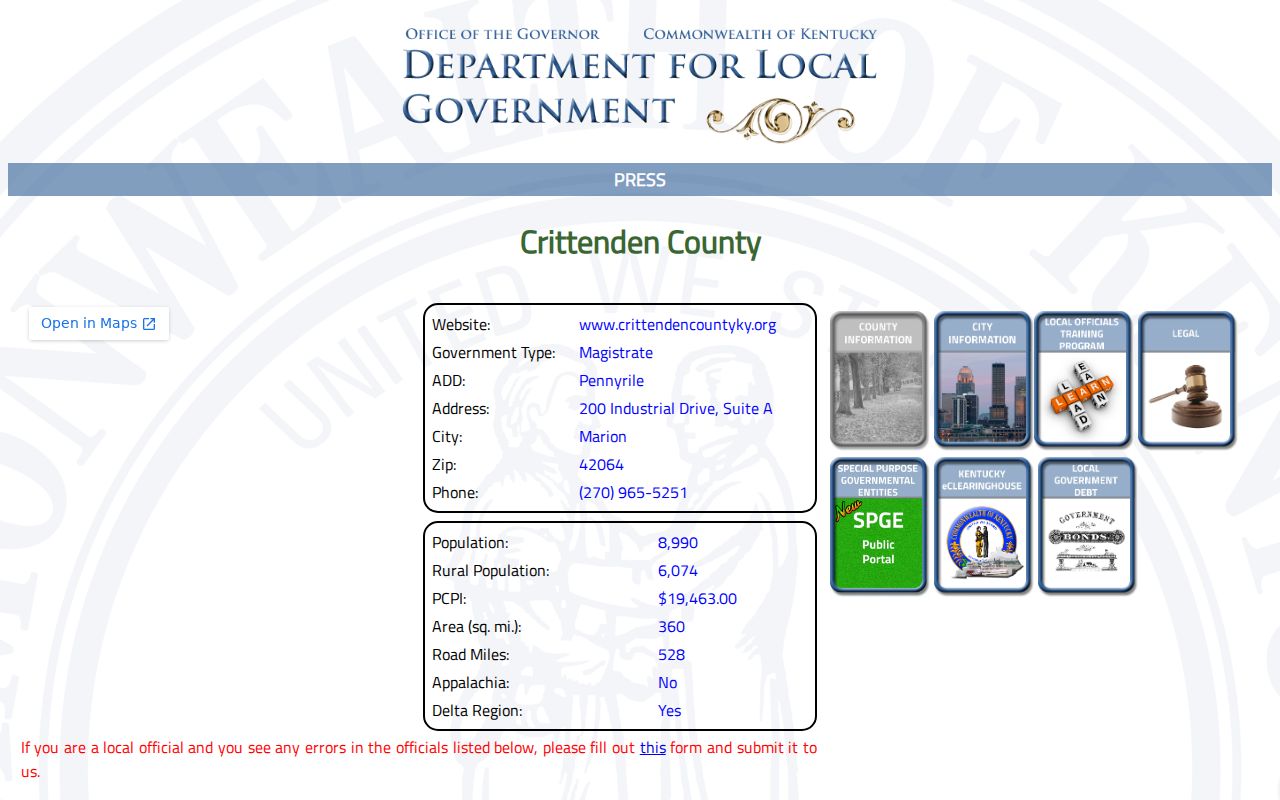
It helps separate similarly named offices serving Marion. The circuit court clerk keeps Marion criminal cases at 208 S. Main. The sheriff works from 200 Industrial Drive, Suite D. The separately elected county clerk occupies Suite B and keeps county-clerk instruments rather than trial-court criminal files. For a Marion criminal record search, go by record creator and custodian, not by the word “clerk” alone.
Where Marion Records Go
A Marion officer creates the incident or arrest report. Booking creates a custody record and fingerprints. A complaint, citation, or indictment creates a separate state court record. The clerk enters court events and dispositions into CourtNet, while fingerprint-supported information can reach KSP's centralized repository. The systems overlap, but none is a universal city history.
Record flow: Marion Police › Crittenden District/Circuit Court › Kentucky State Police
For a recent Marion event, start with police and custody contacts. For Marion prosecution status, use the court gateway and clerk. For a statewide self-review or authorized conviction request, follow KSP's official form process. A CourtNet or FastCheck result can include non-conviction dispositions and should be compared with the Marion judgment when accuracy matters.
AOC FastCheck and One-Time Request produce statewide court reports for a published $25 fee. KSP's general name-based Request for Conviction Records costs $20 and is submitted by mail or walk-in with the subject's permission when requesting another adult. They draw from different systems. For a Marion case, neither product is more authoritative than the clerk's source judgment about what the local court ordered.
Requesting a Marion Police Report
When a phone request is insufficient, use Kentucky's standardized OAG-1 form if the city directs. The Attorney General's open-records guidance provides the law, form, and appeal information.
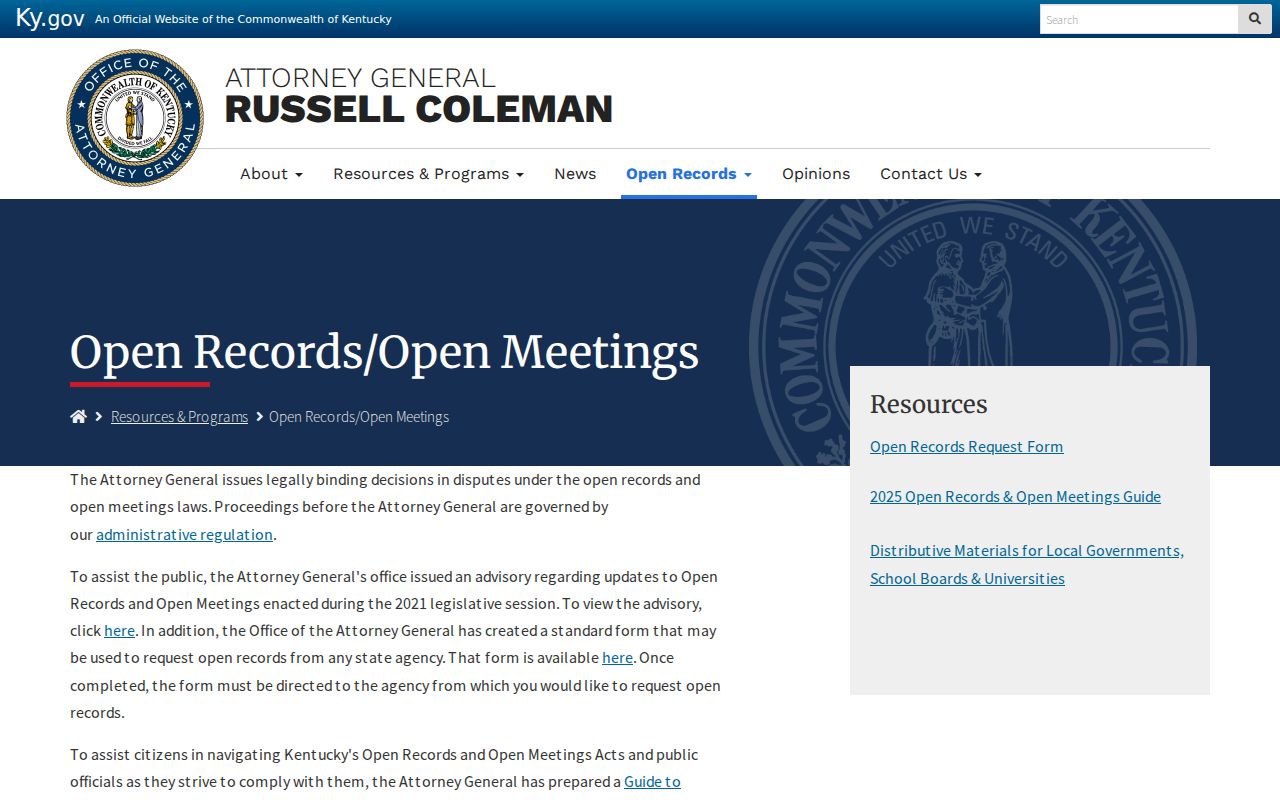
Provide the requester's name, mailing address, Kentucky residency statement when applicable, delivery preference, and a specific description. Add incident number, event date and time, location, people named, and desired report type. Ask for existing records, not answers to questions. If part of the report is exempt, ask for the nonexempt portion with redactions and a written statutory basis for what was withheld.
Keep the response and any tracking information. If Marion says it did not create the record, ask whether the call was handled by the sheriff or KSP Post 2. That routing question is often more useful than resubmitting a broad request. A city custodian cannot release a county or state file it does not possess.
When Marion Record Results Disagree
Compare source records instead of assuming the broadest database is right. A police report can show the original allegation. A booking record shows custody. A District Court entry may reflect an early felony stage, while Circuit Court records the indictment and final felony disposition. KSP compiles fingerprint-supported repository data, and AOC reports compile court data. A dismissal can appear even though it is not a conviction.
For a court mismatch, gather the report, case number, and judgment and contact the circuit clerk or AOC correction channel. For KSP data, use the KSP review and correction instructions. Older paper files may not be fully digitized. Expunged and sealed records are restricted by law, so a public search result can change after a valid order.
Kentucky expungement begins with a certification process for eligible cases. It is not a request to a web search service to erase a result. The research lists a $40 certification fee and separate filing fees that vary with the type of case. Eligibility and current procedure should be confirmed through Kentucky Court of Justice. A person correcting an error should use the correction route, which is distinct from asking a court to expunge a valid record.
Public Access Rules in Marion
The Kentucky Open Records Act generally allows inspection of nonexempt public records held by Marion agencies. Access is not unlimited. Active-investigation material may be withheld when disclosure would cause concrete harm. Personal privacy, juvenile, sealed, expunged, and other protected information may be removed. Court records follow judicial access rules through the circuit clerk rather than the executive-branch open-records process.
Key Statutes:
Kentucky Open Records Act, KRS 61.870-61.884 - establishes access to nonexempt executive-branch public records.
KRS Chapter 17 - governs criminal-history dissemination and sex-offender registration.
KRS Chapter 431 - contains Kentucky expungement provisions that can restrict public access.